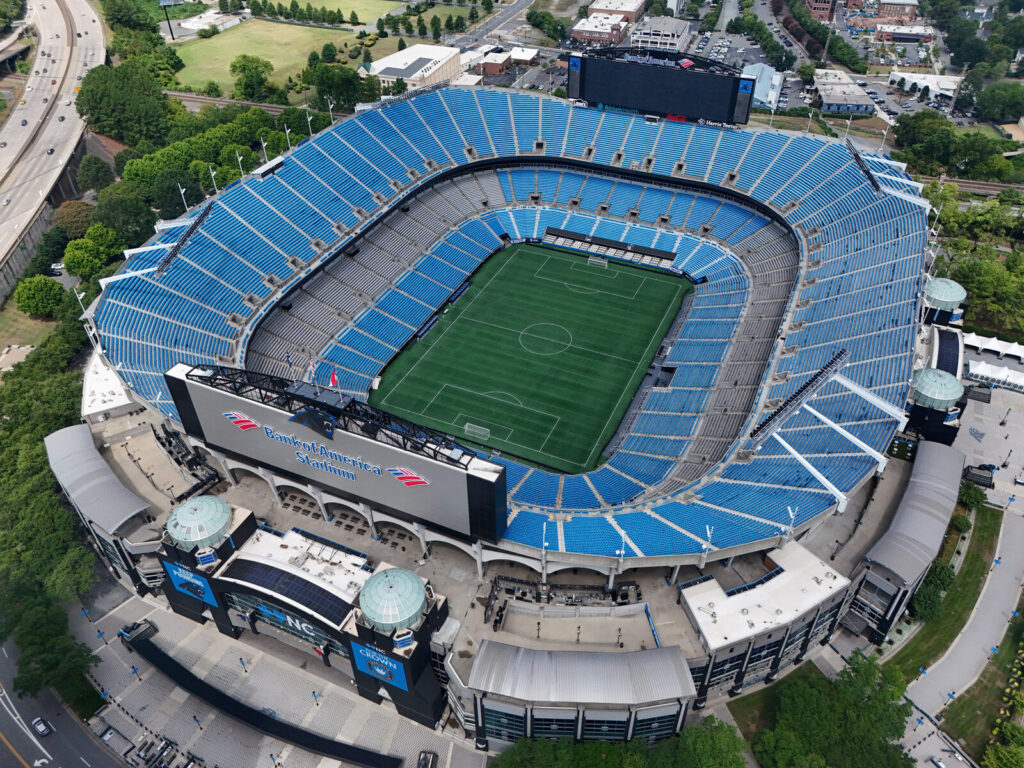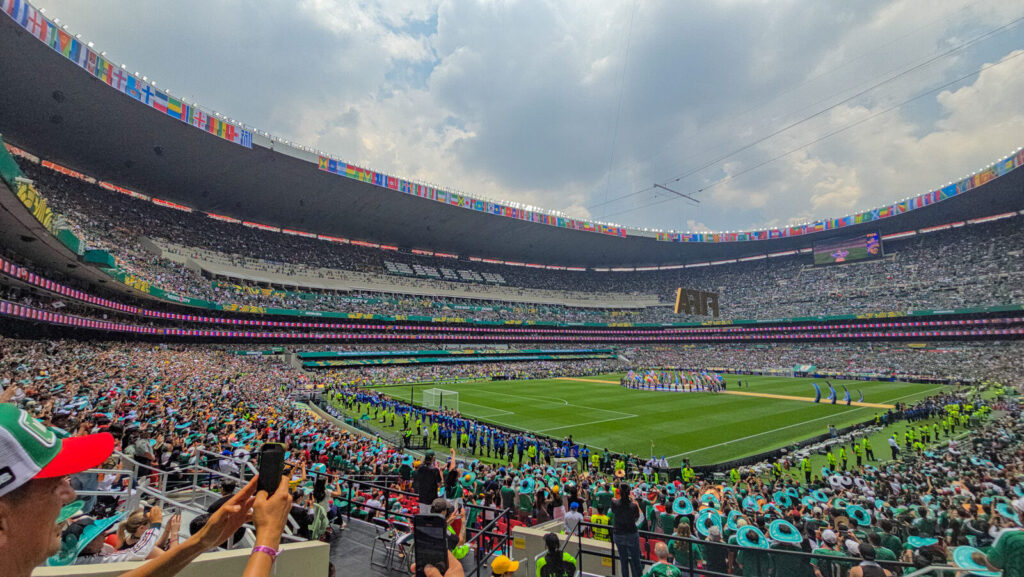
The FIFA World Cup 2026 attendance record is not a close call, and neither is the ratings story. By the time Argentina and Spain walk out at MetLife Stadium for today’s final, the 48-team tournament will have out-drawn every World Cup in the competition’s 96-year history, both in the stands and on television screens worldwide. Group-stage crowds alone topped 4.6 million fans, blowing past the previous all-time mark of roughly 3.5 million set at USA 1994. The broadcast side kept pace. Fox’s coverage of the USA’s Round of 16 exit to Belgium pulled in 30 million viewers, the largest audience for a soccer match in American television history.
Those two facts, packed stadiums and record ratings, are really one story about the business of hosting a World Cup. A bigger, 104-match format was always going to produce bigger totals. The more interesting question, and the one FIFA’s own numbers help answer, is whether the appetite per game actually grew, or whether the tournament simply played more of them.
Stadiums Kept Filling Up, Match After Match
FIFA confirmed that 4,644,549 fans attended the group stage, an average of 64,508 per match across all 72 games, with stadiums running at 99.7 percent of capacity. That average held up as the bracket narrowed. By the end of the Round of 16, cumulative attendance stood at 6,259,584 across 96 matches, an average of 65,204 a game, according to FIFA’s own tournament data. June 25 produced the single busiest day in World Cup history, 426,834 spectators across the matches played that day alone.
None of that was guaranteed. Expanding to 48 teams meant adding early-round matchups between nations without deep fan bases in North America, the kind of games that could have dragged the average down. Instead, venues in Mexico City, Toronto and across the United States ran close to full for almost every kickoff, a detail that matters more to FIFA’s broadcast and sponsorship partners than the headline total does. It is also the backdrop for the sponsorship board built around this exact tournament, which sold partly on the promise that a 48-team field would still command a premium audience.
Television Numbers Broke Just as Hard
USA vs. Paraguay, the tournament opener for the hosts, averaged 27.5 million viewers across Fox and Telemundo, the most-watched World Cup match ever broadcast in the United States. That record did not last. The USA’s Round of 16 loss to Belgium drew roughly 30 million viewers on Fox alone, the most-watched soccer telecast in American history, with the Spanish-language broadcast adding millions more on top of that. Across the full group stage, Fox, FS1 and Tubi combined for an average of nearly 5.1 million American viewers per match across 72 games, a 92 percent jump over the 2022 tournament in Qatar.
The surge was not a US phenomenon. Germany’s 7-1 opening win over Curaçao drew 23.43 million viewers on German broadcaster ARD, a 70.2 percent share of the national audience. Japan’s win over Tunisia averaged 22.4 million viewers on Nippon TV, peaking at 27.6 million, FIFA said. Brazil vs. Haiti pulled a combined 30.7 million across TV Globo and SporTV, the country’s highest-rated broadcast of the year.
The Per-Match Math Tells the Real Story
Here is the comparison that actually settles the question. Qatar 2022 drew 3,404,252 fans across 64 matches, an average of 53,191 per game, a figure FIFA itself has published. World Cup 2026’s average through the Round of 16, 65,204 fans across 96 matches, works out to roughly 22.6 percent higher per game than Qatar managed across its entire run. Divide either tournament’s total by its own match count and the trend holds in the same direction: this was not a bigger number produced only by scheduling 40 additional matches. The average game, from a Group C afternoon in Kansas City to a knockout night in Los Angeles, drew noticeably more people through the gates than the average game four years earlier.
That distinction is what will drive FIFA’s next set of conversations with broadcasters and sponsors long after today’s final ends. A rising total is easy to produce by adding matches. A rising average is proof that demand grew alongside the format, and it is the number rights-holders will point to when the next US media deal comes up for negotiation. Between the crowds this tournament pulled and the chaos that got Argentina to today’s final, FIFA has a case that the expanded World Cup did not just get bigger. It got more valuable, one match at a time.