Texas Tech made itself part of naming-rights history on July 17, when Texas Tech Athletics announced a 15-year partnership with the technology and digital assets company Galaxy, turning the home of Red Raider football into Galaxy Stadium starting with the 2026 season. It is the newest entry in a market that keeps setting new price ceilings, and it gives us a reason to finally answer the question a lot of fans type into Google: which are the biggest stadium naming rights deals in North American sports, and how does a school like Texas Tech compare to the pros?
We built our own ranking below, using only figures that could be checked against at least one primary announcement and cross-referenced against independent reporting. Several widely cited deals, including Mercedes-Benz Stadium and Climate Pledge Arena, never had a total dollar figure officially confirmed by either side, so we left them out of the ranked table rather than repeat someone else’s guess.
How We Ranked the Biggest Stadium Naming Rights Deals
Our methodology is simple. Deals are sorted by total disclosed or credibly reported contract value, using the figure attached to the original agreement rather than later extensions. Where a deal’s exact length was never made public, we still included the confirmed total value but marked the term as undisclosed instead of estimating one. Annual averages are shown for comparison only; they did not change a single deal’s rank.
| Rank | Stadium/Arena | Brand | Sport/Team | Deal Value | Deal Length | Year Signed |
|---|---|---|---|---|---|---|
| 1 | Crypto.com Arena | Crypto.com | NBA/NHL/WNBA (Lakers, Clippers, Kings, Sparks) | $700 million (~$35M/yr) | 20 years | 2021 |
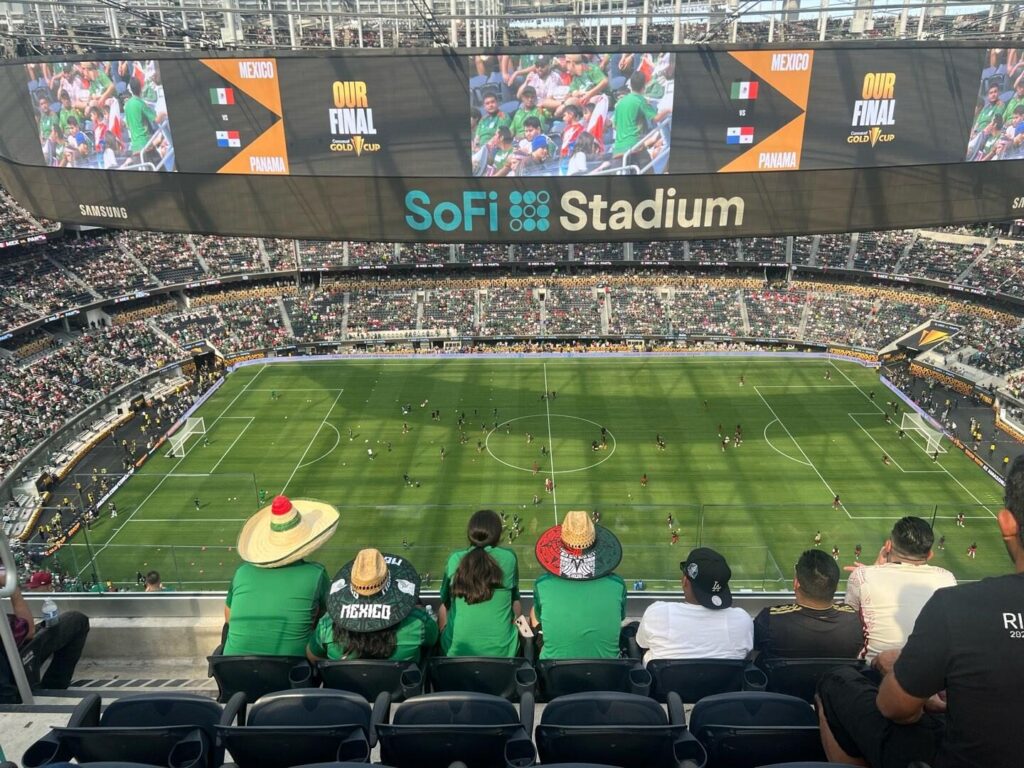
| 2 | SoFi Stadium | SoFi | NFL (Rams, Chargers) | ~$600 million (~$30M/yr) | 20 years | 2019 |
| 3 | Intuit Dome | Intuit | NBA (Clippers) | $500 million+ | 23 years | 2021 |
| 4 | MetLife Stadium | MetLife | NFL (Giants, Jets) | ~$400 million (reported) | 25 years | 2011 |
| 5 | Chase Center | JPMorgan Chase | NBA/WNBA (Warriors, Valkyries) | ~$300 million (reported) | 20 years | 2016 |
| 6 | Truist Park | SunTrust/Truist | MLB (Braves) | ~$250 million (reported) | 25 years | 2014 |
| 7 | Levi’s Stadium | Levi Strauss & Co. | NFL (49ers) | $220.3 million (original deal) | 20 years | 2013 |
| 8 | US Bank Stadium | U.S. Bank | NFL (Vikings) | $220 million | 25 years | 2015 |
| 9 | American Airlines Center | American Airlines | NBA/NHL (Mavericks, Stars) | $195 million | 30 years | 1999 |
| 10 | Golden 1 Center | Golden 1 Credit Union | NBA (Kings) | $120 million (~$6M/yr) | 20 years | 2015 |
| 11 | Toyota Center | Toyota | NBA (Rockets) | $100 million (~$5M/yr) | 20 years | 2003 |
| 12 | Galaxy Stadium (Texas Tech) | Galaxy | NCAA Football (Red Raiders) | $75 million reported (~$5M/yr) | 15 years | 2026 |
What’s Driving the Naming-Rights Boom
Crypto exchanges, fintech firms and now digital-infrastructure companies keep pushing prices higher because a stadium name buys decades of guaranteed exposure at a fixed cost, unlike a single Super Bowl ad. Crypto.com’s $700 million bet on the old Staples Center in 2021 rewired the market almost overnight, and Intuit followed a few months later with a deal worth at least $500 million for a brand-new Clippers arena that hadn’t even broken ground. Newer sports leagues and conferences have noticed the trend too. College athletics, squeezed by rising player payrolls under NIL and revenue sharing, is now chasing the same corporate dollars that pro venues have banked for two decades. Galaxy’s arrival in Lubbock fits that pattern exactly, since West Texas is already home to major data center investment the company is expanding nearby.
How the Texas Tech-Galaxy Deal Stacks Up
Athletics director Kirby Hocutt called the agreement transformative for the program. “We’re pleased to welcome Galaxy as the new naming rights partner of our football stadium,” Hocutt said in the university’s official announcement. “When I visit with alumni across the country, the conversation almost always turns to their favorite memories inside our stadium. We look forward to creating many more of those moments together in Galaxy Stadium, one of the premier home-field environments in college football. This long-term partnership with Galaxy will have a lasting impact on Texas Tech Athletics.” At a reported $75 million over 15 years, the deal averages out to roughly $5 million a year, which lands right alongside Toyota Center’s $5 million annual rate and just under Golden 1 Center’s $6 million. That is a notable outcome for a college program competing against arenas in the country’s largest media markets. It will not touch the Crypto.com or SoFi numbers, but it shows how much the gap between college and pro naming-rights economics has closed since Learfield began pairing NIL packages with venue branding, a shift similar in spirit to how ownership groups elsewhere have reshaped franchise economics, including Khosla’s record-setting Seahawks purchase.
What These Deals Mean for Athletic Department Budgets
For college programs, a naming-rights check is direct, unrestricted revenue that can be pointed straight at facilities, coaching salaries or NIL collectives without waiting on ticket sales or television windows. Pro franchises use the same money differently, often to offset construction debt on venues that can cost more than a billion dollars to build. Golden 1 Center’s $120 million helped anchor arena financing in Sacramento, while U.S. Bank’s $220 million naming deal factored into the Vikings’ new stadium math the same way. The dollar gap between the biggest and smallest deals on this list, from $700 million down to $75 million, mostly reflects market size and media exposure rather than the quality of the venue itself. As more digital-asset and AI infrastructure companies look for mainstream credibility, expect more deals that mirror Galaxy’s approach: a stadium sign paired with a broader regional investment pitch that extends well beyond the logo itself. That strategy already reshaped pro sports ownership economics in cities like Toronto, where Rogers’ buyout of its last partner showed how much control corporate money can eventually buy. Whether Galaxy’s bet on Lubbock pays off the way SoFi’s and Crypto.com’s have paid off in Los Angeles will depend on how visible West Texas becomes over the next 15 years, but it already sits in the same company as some of the ranked, record-setting deals that define modern sports business.