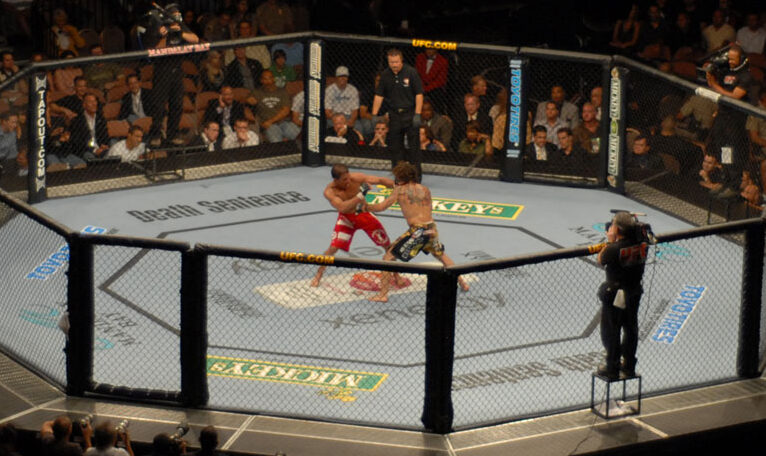
Most UFC fights do not end in a knockout or submission. They go the distance and are decided by three judges at cageside, which means the scoring system shapes the outcome as much as the fighting does. Here is how the UFC scores a fight, round by round, under the Unified Rules of Mixed Martial Arts.
The 10-point must system
Every round is scored on its own using the 10-point must system. The judge must give 10 points to the fighter who wins the round and 9 or fewer to the other fighter. There is no carry-over between rounds, so a dominant first round does not bank points for later. At the end, the three judges add up their round scores and the totals decide the result.
The four possible round scores
- 10-9: the standard score, used when one fighter clearly wins a competitive round.
- 10-8: a dominant round, where one fighter wins by a wide margin through impact, control or damage.
- 10-10: a genuinely even round with no meaningful difference between the fighters. It is rare and judges are discouraged from using it.
- 10-7: reserved for a completely one-sided round that overwhelms the opponent. It is the rarest score of all.
What judges actually reward
The Unified Rules tell judges to score in a strict order of priority. First comes effective striking and grappling, which is about impact and effect, not just volume. A clean strike that hurts an opponent counts for more than a busy flurry that does nothing, and grappling covers takedowns, control time and submission attempts. Only if the two fighters are truly even on that first criterion do judges move to effective aggressiveness, and only if they are still even after that do they weigh control of the octagon.
How the decision is named
Once the totals are in, the type of decision depends on how the three judges agreed. A unanimous decision means all three scored the same fighter as the winner. A split decision means two judges favored one fighter and the third favored the other. A majority decision means two judges picked the same winner while the third scored it a draw. The same math can also produce a draw when the cards cancel out.
Understanding the scoring explains why so many close fights spark debate the moment the cards are read. For more on how the sport is structured, see our guides to how UFC rankings and title shots work and what makes UFC fight promotion so effective, or browse our breakdown of how UFC judges score a fight. The scoring criteria follow the official Unified Rules published by the UFC.