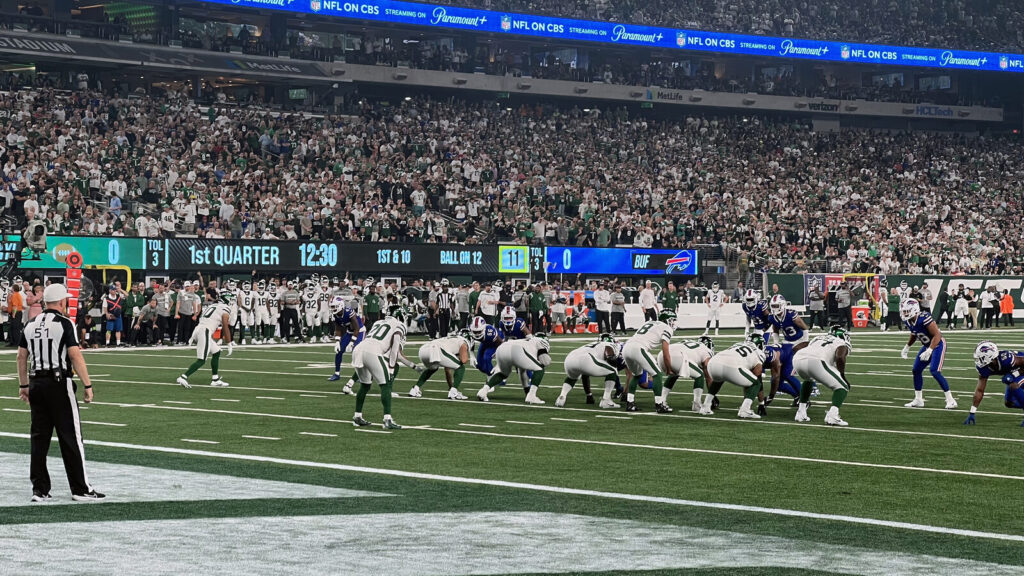
Buffalo traded a 2026 second-round pick to pry DJ Moore away from Chicago. Buffalo spent a fourth-round pick on UConn’s Skyler Bell, who caught 101 passes last season. And in January, Buffalo fired Sean McDermott, promoted play-calling offensive coordinator Joe Brady to head coach and hired Pete Carmichael Jr. to run the day-to-day offense. None of those moves targeted Keon Coleman specifically. All of them land on him at once as training camp opens on July 29 in Pittsford, New York.
Coleman said it himself after a June minicamp session, and the quote has followed him into camp. “For me, it’s make or break,” he told reporters, adding that falling short of his own standard this year would be “a disservice” to himself and the team. It is a blunt admission from a player who has heard variations of that sentence from outsiders since his rookie year, but rarely said it about himself.
The number that explains the urgency is 960. That is Coleman’s combined receiving total across two NFL seasons, on 67 catches and eight touchdowns in 26 games, a modest return for the 33rd overall pick in the 2024 draft. Buffalo selected the Florida State receiver with the first pick of round two, betting his 6-foot-3 frame and contested-catch ability would translate into a featured role opposite Khalil Shakir. It has not happened yet.
The season-to-season shape of that production, drawn from official NFL.com player stats, tells a more layered story than the counting numbers alone. As a rookie in 2024, Coleman caught 29 of 57 targets for 556 yards and four touchdowns, a 50.9 percent catch rate paired with a gaudy 19.2 yards per catch built on a handful of explosive downfield plays. In 2025, his role changed: 38 catches on 59 targets for 404 yards and four scores, a 64.4 percent catch rate but a career-low 10.6 yards per catch. Coleman caught more often in year two. He did far less with each catch, evidence of a player pushed into shorter, safer routes rather than the vertical role Buffalo drafted him to fill. He was also benched for stretches of 2025, a stint he has since called unacceptable.
That shift in usage is the backdrop for everything Buffalo did to the receiver room this offseason. Moore, who posted two 1,100-yard seasons under Brady in Carolina, arrives as the proven outside complement to Shakir that Coleman was supposed to become. Bell, a decorated UConn producer, gives Buffalo a fourth option who can win underneath. Josh Palmer and Tyrell Shavers round out a suddenly crowded depth chart. Coleman is no longer competing for targets so much as for a roster spot, with training camp reps as his best evidence.
He also enters camp still absorbing an unusual public airing of his own draft history. Bills owner Terry Pegula told reporters in January, after firing McDermott, that the coaching staff had pushed to select Coleman in 2024 and that he was not general manager Brandon Beane’s top choice at the time. Beane pushed back on the framing, saying the pick was ultimately his. The exchange left Coleman publicly tied to a front-office dispute he did not create, on top of the on-field questions he still has to answer.
What makes 2026 different from Coleman’s first two seasons is the coaching change itself. Brady, who called Buffalo’s offense in both of Coleman’s uneven years, now runs the building, and early reports from OTAs and minicamp described an outstanding offseason from the receiver, including standout reps in team drills. Whether that translates to game production is the entire question of his summer. A crowded receiver room means fewer clean opportunities, but it also spreads out the burden, not unlike how Baltimore’s roster math around Lamar Jackson shapes what that offense can realistically ask of one player.
Coleman turns 23 during a contract year that carries a fifth-year option decision for Buffalo next offseason. The tools that made him a second-round pick, the size at the position and the catch radius, have not disappeared. What is missing is a season where the yards per catch and the target share rise together instead of trading off against each other. Buffalo just spent two draft assets and a coaching change reshaping the room around him. Camp will show whether Coleman uses the room he has left.