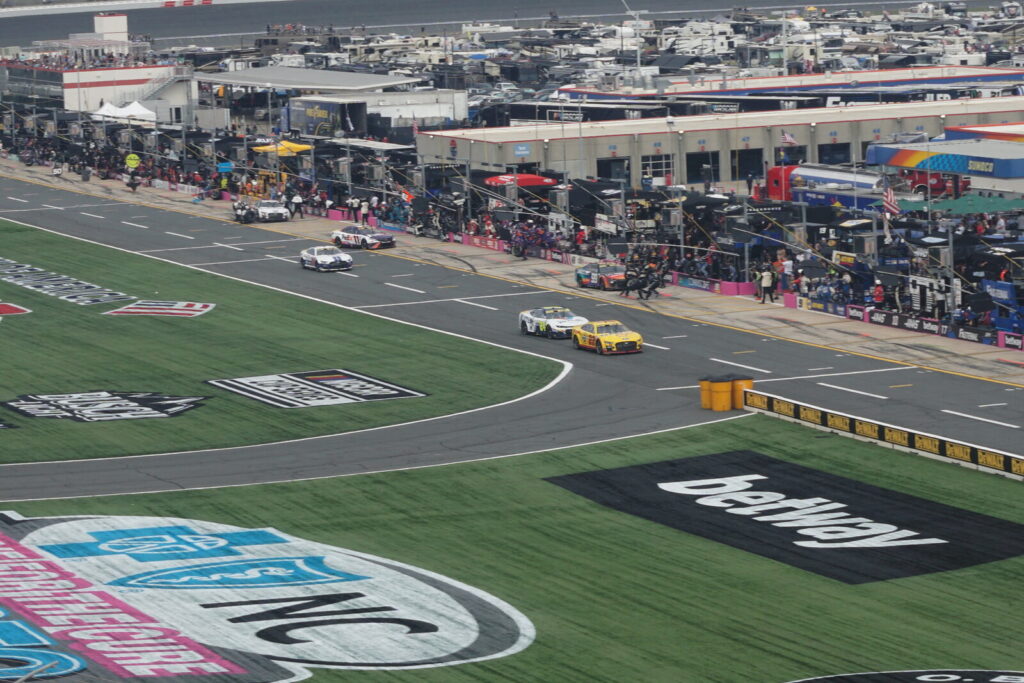
NASCAR wrapped its second annual In-Season Challenge on July 26 at Indianapolis Motor Speedway, and Todd Gilliland walked away with the title, and the $1 million check that comes with it. If the format still feels new to casual fans, that is because it is. The tournament is a mid-season bracket experiment layered on top of the Cup Series schedule, separate from the points race and separate from the playoffs that decide the actual championship in the fall.
The idea traces back to Denny Hamlin, the veteran driver and Joe Gibbs Racing team owner, who pitched NASCAR on borrowing the drama of March Madness and the NBA Cup for a stretch of the summer schedule. The concept debuted in 2025, making the 2026 edition only the second one in the sport’s history. Ty Gibbs won that first tournament as the No. 6 seed, driving for Joe Gibbs Racing, and entered 2026 as the defending champion before the bracket reset from scratch.
The format itself is straightforward once you see it laid out. Thirty-two Cup Series drivers qualify based on where they sit in the points standings after the Pocono race, and those standings also set the seeding from top to bottom. From there it is single elimination. Each round is decided inside a single points-paying Cup race, and whichever of the two seeded drivers finishes ahead of the other advances, regardless of where either car actually finishes in the overall running order.
The 2026 bracket ran across five consecutive weekends. The Round of 32 opened at Sonoma Raceway on June 28, followed by the Round of 16 at Chicagoland Speedway on July 5. The Elite Eight matchups played out at EchoPark Speedway in Atlanta on July 12, and the Final Four moved to North Wilkesboro Speedway on July 19, which replaced Dover Motor Speedway as the penultimate round used in the 2025 tournament. The championship round closed the field at Indianapolis on July 26, coinciding with the Brickyard 400. According to NASCAR’s official recap of the format, schedule and results, the winner-take-all prize for the last driver standing is $1 million, making it only the second $1 million bonus event on the Cup Series calendar alongside the All-Star Race.
NASCAR also runs a companion contest for fans, who fill out their own bracket predictions for a shot at cash prizes, with a $1 million grand prize reserved for anyone who nails every single matchup correctly. It is a low-cost way for the sanctioning body to keep casual eyes on races that otherwise fall in a quiet stretch of the schedule, wedged between the spring grind and the fall run toward NASCAR’s real playoff field, which we broke down in our guide to who’s in and who’s out of the playoff picture. The timing is no accident either, since NASCAR needed something to fill the mid-summer lull that hits most of motorsport, the same stretch that is why F1 takes its own summer break after Hungary.
This year’s finish had real drama attached to it. Todd Gilliland, driving the No. 34 for Front Row Motorsports, entered the tournament seeded 25th, one of the lowest seeds in the field, and had to string together four straight upsets just to reach Indianapolis. He faced Ryan Blaney, the No. 3 seed for Team Penske, in the championship round. Blaney had cruised through his first four matchups, none of them decided by fewer than eight positions, but his run unraveled when he made contact with John Hunter Nemechek around Lap 120 of the Brickyard 400 and lost significant ground. He clawed back to within two spots of Gilliland in the closing laps but could not complete the comeback, and NASCAR’s race coverage confirmed Gilliland held on to claim the win and the $1 million payout.
The seed gap tells its own story. Gibbs won the inaugural tournament from the No. 6 seed in 2025, a strong position that reflected a driver already running well in points. Gilliland did it a year later from the No. 25 seed, deep in the bottom half of the bracket, which makes his run the biggest longshot title in the format’s short history so far. Two editions in, that kind of variance is exactly what NASCAR was chasing when it built a bracket where a single bad pit stop or late-race wreck can end a stronger driver’s summer in an instant.
Whether the In-Season Challenge sticks around in its current shape long term is still an open question, but for five weeks each summer it gives drivers outside the championship conversation a real reason to race for something other than points, and it gives fans a bracket to fill out while NASCAR’s bigger storylines simmer toward the fall.