Every August since 2021, the dunes above the North Sea have shaken under a wall of orange as tens of thousands of fans pack Circuit Zandvoort to watch Formula 1 return to Dutch soil, and that spectacle is now approaching its final scheduled edition. Formula 1 and Zandvoort’s local promoters have agreed to only a one-year extension that keeps the Dutch Grand Prix on the calendar through 2026, with the race set to be dropped from the schedule once that weekend is complete. The circuit that seemed reborn just five years ago, packed to capacity and driven by the Orange Army in the stands, is instead entering a farewell tour built into its own contract.
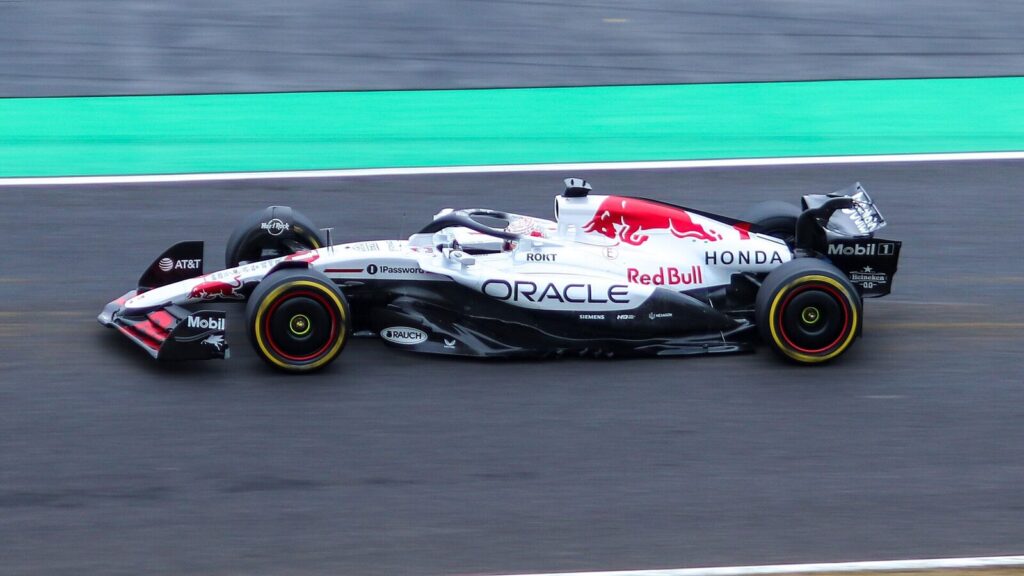
The current run at Zandvoort only exists because of a long absence: the circuit hosted the Dutch Grand Prix from 1952 to 1985 before vanishing from the calendar for 36 years, returning only in 2021. That comeback arrived at the same moment Max Verstappen emerged as a genuine title contender for Red Bull, and the crowds that flooded the dunes were sold out and nicknamed the Orange Army, a wave of fans whose presence became as much a part of the broadcast as the racing itself. The circuit’s revival, in other words, was never separate from Verstappen’s own rise; the two stories were told together from the very first lap back.
Until 2024, Verstappen had won every Dutch Grand Prix held since the circuit’s 2021 return, taking the checkered flag three consecutive times from 2021 through 2023 before finishing second in 2024, the first time since the comeback that he failed to win at his home race. His three victories still leave him one short of Jim Clark’s all-time record of four Dutch Grand Prix wins, a mark set across 1963, 1964, 1965 and 1967 that has stood for decades. McLaren ended the run outright, with Lando Norris winning in 2024 and Oscar Piastri taking the 2025 edition, closing the door on a stretch that had defined Zandvoort’s modern identity as much as the dunes themselves.
Physically, Zandvoort remains one of the most distinctive circuits left on the calendar, a 4.259-kilometer, 14-corner layout squeezed between North Sea sand dunes with minimal run-off area, giving every lap an old-school, high-risk character that few modern tracks still offer. Its banked final corner, the Arie Luyendijk Corner, carries 18-degree banking that has been described as steeper than many oval circuits, a piece of racing engineering that sets Zandvoort apart from most modern tracks. The venue seats 105,000 spectators, and from 2021 through 2023 it drew more than 300,000 fans across each full race weekend.
The 2026 Dutch Grand Prix, scheduled for August 21-23, will run in sprint format for the first time, a change detailed on Formula 1’s own 2026 calendar page and one that mirrors the shortened weekend structure now used at several other European rounds; readers can find a full breakdown of how that qualifying format actually works in a separate piece on sprint qualifying. Adding a sprint to what may be the circuit’s final scheduled weekend gives the farewell an extra session on track before the race disappears from the calendar.
The pressure behind Zandvoort’s exit has little to do with the racing and everything to do with arithmetic: Formula 1’s calendar has grown to a record 24 races, and organizers are increasingly turning to a rotation system among European circuits simply to make room for newer markets elsewhere on the schedule. Barcelona, Spa and Imola have all been named as candidates for a rotating European slot from 2026 onward, sharing a single calendar position rather than each guaranteeing an annual date. Spa’s situation illustrates the difference that matters most for Zandvoort: Belgium’s circuit stays on the calendar through that rotation from 2027, while Zandvoort’s own deal ends outright after 2026, with no rotating slot attached to it.
Zandvoort’s contract with Formula One Management expires at the end of 2026, and the local promoter has chosen not to renew it, leaving no confirmed date for the race’s return once the current agreement lapses.
Grand Prix director Robert van Overdijk explained the thinking behind timing the exit at the height of the event’s success rather than waiting for interest to fade, saying organizers planned two more editions of the Dutch Grand Prix in 2025 and 2026 before the agreement with Formula 1 comes to an end.