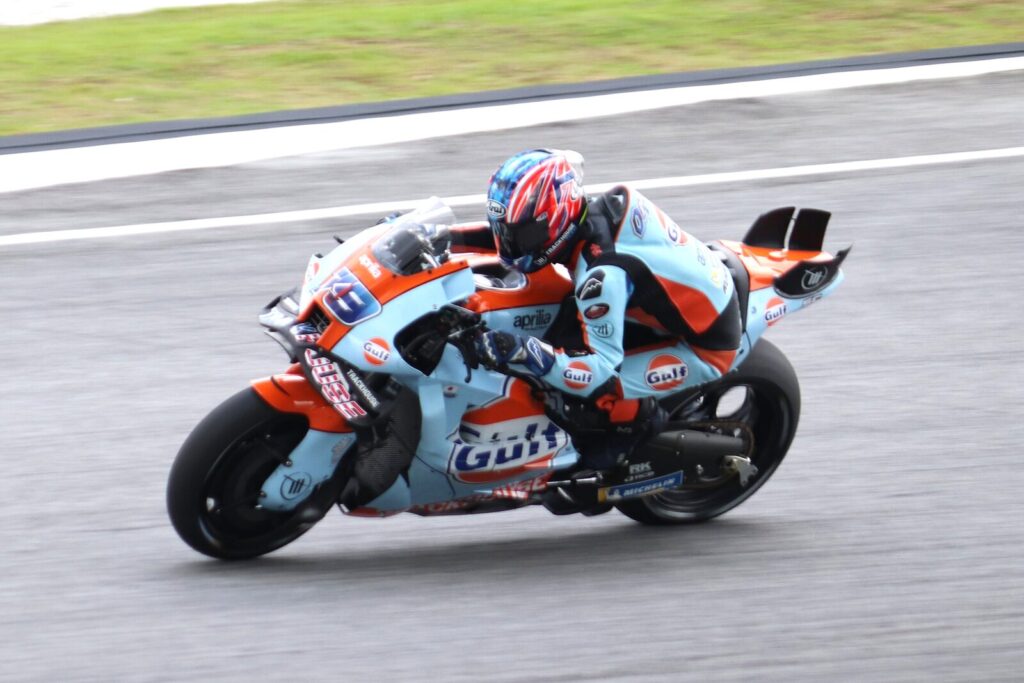
Japan waited 22 years for this. Ai Ogura crossed the line at Assen on June 28 to win the Dutch Grand Prix, becoming the first Japanese rider to win a premier-class MotoGP race since Makoto Tamada’s win in 2004.
Ogura, riding for Trackhouse’s Aprilia, held off his own teammate Raul Fernandez by 2.004 seconds after a race that swung several times before settling. Marco Bezzecchi crashed out of contention, and reigning form favorite Jorge Martin salvaged third for Aprilia’s factory squad, giving the manufacturer a podium sweep even as the Trackhouse satellite bikes took the top two spots.
A win two seasons in the making
The victory built on real foundations, even if the road to it was anything but smooth. Ogura arrived in MotoGP for 2025 as the reigning Moto2 world champion, the first Japanese rider to win a world championship in any grand prix class in fifteen years, since Hiroshi Aoyama’s 250cc title in 2009. His rookie season, though, was defined more by injury than by results: a broken leg suffered in a crash during the 2025 British Grand Prix weekend required surgery, and a separate accident at Misano left him with a hand injury. He finished his debut year 16th in the championship with eight top-10 finishes, a solid if unspectacular return given the setbacks.
That context is what makes Assen notable beyond the bare historical trivia. This is a rider who spent much of his first MotoGP season recovering rather than racing, breaking through in year two once his body, and his Aprilia package, were finally aligned on the same weekend.
Trackhouse’s statement weekend
The win also capped a dominant weekend for Trackhouse, which had Fernandez win Saturday’s sprint before Ogura took Sunday’s main event, giving the American-owned team a 1-2 finish across both races at the same round. For a young Aprilia satellite squad still building its identity in MotoGP, sweeping a Grand Prix weekend against Ducati’s usual grid dominance is as much a validation of the project as it is of any single rider.
It also reshuffled the championship without Ogura needing to factor into the title fight directly. Bezzecchi’s crash, combined with Martin’s third place, handed Martin the points lead for the first time since the season stopped in Austin, by a seven-point margin heading into the summer break. Marc Marquez stayed put at 40 points off the pace, just swapping which rival he’s chasing. Ogura himself is now within 25 points of the championship lead off the back of a single win, a reminder of how compressed the top of the standings has become this season.
There’s a broader pattern here too. MotoGP’s grid has spent the past two seasons dominated almost entirely by Ducati machinery, to the point where non-Ducati race wins became newsworthy in their own right. An Aprilia rider taking the championship lead, with two more Aprilia-powered bikes finishing behind him at Assen, suggests the sport’s competitive balance is shifting in a way that goes beyond one rider’s breakthrough weekend.
Whether Ogura can turn Assen into a springboard rather than a one-off will depend on consistency the rest of the season provides. Twenty-two years is a long time to wait for a repeat. For now, though, the number that matters is simpler: one race, one Japanese winner, and a 22-year gap finally closed. Follow the rest of the season’s storylines in Racing.