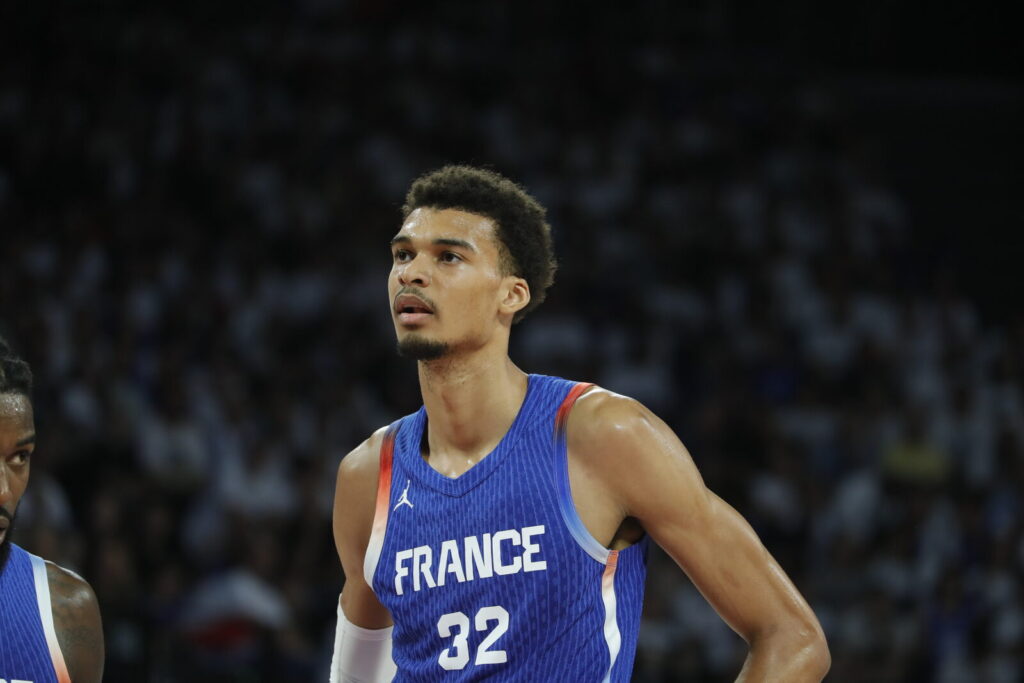
Three max-level veterans faced the identical contract clause this June, and they answered it three different ways. Draymond Green walked away from $27.7 million. James Harden turned down $42.3 million. Zach LaVine kept his $49 million. All three had a player option, and the choice each one made says as much about roster building in 2026 as it does about the mechanics of the clause itself.
A player option is a provision written into the final season of an NBA contract that hands the decision to the player, not the team. Once free agency opens, the player can either exercise the option and lock in the salary already written into the deal for that year, or decline it and become a free agent, either re-signing with his own team or testing the open market. Nothing about the number can be renegotiated inside the option year itself. It is binary: take the guaranteed money or walk into free agency and negotiate something new.
That is the opposite of a team option, where the club holds the decision instead of the player. A team option lets a front office keep someone at a set price or release him into free agency, the mirror image of what Green, Harden and LaVine just navigated. Early termination options work almost identically, giving a player the right to exit early, but they typically sit inside deals that would otherwise run fully guaranteed for additional seasons rather than tacking one extra year onto the end.
Green’s decision on June 29 shows why front offices watch this call so closely. According to Hoops Rumors’ running tracker, his exact option figure was $27,678,571, and turning it down did not send him anywhere. The expectation across the league is that he re-signs with Golden State at a lower annual salary, freeing cap room the Warriors can steer toward a run at LeBron James through the $15 million non-taxpayer mid-level exception, or a trade for Anthony Davis. Green explained the thinking on his own podcast: “As you all know, I’ve always taken the approach of working with the organization. I’ve been in one place for 14 years. It’s more of a family to me than anything.” That is loyalty language, but it is also cap strategy. Bringing his own number down gives the front office room to make a bigger swing elsewhere, part of why Green has reportedly made a personal recruiting pitch as Golden State waits to hear where James lands among his five reported finalists.
Harden’s version of the same math points at a different goal. Shrinking Cleveland’s books had little to do with declining $42.3 million. He did it to negotiate a fresh multiyear contract, reportedly in the $30 million-a-year range once finalized, trading a chunk of guaranteed short-term money for a second or third season attached to his next deal with the Cavaliers, a team that already restructured its backcourt around him.
LaVine chose the opposite path. He opted into his $49 million salary for 2026-27 rather than testing a market coming off a season cut short by hand surgery, according to his agent, Rich Paul. Guaranteed money at a fixed price beat the uncertainty of free agency for a player facing real health questions.
The league-wide split this offseason landed close to even. Per Hoops Rumors, 11 veterans with player options declined them this summer, while 10 chose to opt in, a spread that shows how differently the calculation plays out depending on health, leverage and how badly a team needs the salary-cap breathing room. NBA.com’s own free agency rundown confirms all three outcomes here, with Green and Harden among the decliners and LaVine among the ten players who stayed put.
None of that flexibility is free for the team on the other side of the decision. When a player declines an option, his old cap figure typically comes off the books until a new deal gets signed, the exact mechanism Golden State is using to chase more than one star simultaneously instead of pouring all its room into Green alone. It only works if the player is willing to come back for less than he walked away from, and Green has signaled that he is. Whether that bet pays off may hinge on a decision LeBron James himself has not yet made.