A Ferrari FIA investigation opened on the first practice day of the Belgian Grand Prix at Spa-Francorchamps and closed within about an hour. Technical delegate Jo Bauer reported both Ferrari cars to the stewards on Friday, July 17, over a tyre return procedure the team simply forgot to complete. Nobody was sent to the back of the grid. Fred Vasseur predicted the outcome before it was even announced. Still, the episode is a clean window into how FIA investigations actually unfold, from the delegate’s report to the summons to the published verdict.
What Triggers an FIA Investigation?
Two separate paths can put a team in front of the stewards. The first is internal: FIA technical delegates watch every session for breaches of the sporting and technical regulations, from fuel samples to floor deflection tests to, as at Spa, tyre logistics. When a delegate spots something, they file a written report recommending the stewards look into it. Jo Bauer’s report on Ferrari read simply, “I am reporting these matters to the stewards for their consideration.”
The second path is external. Any competitor can lodge a formal protest against a rival within 30 minutes of a session or race result under Article 11 of the International Sporting Code, backing it with a refundable fee returned only if the protest succeeds. Protests are rarer than delegate-driven cases because rivals need hard evidence, not suspicion, to risk the cost.
How Does the Stewards’ Process Work?
Once a report or protest lands, the stewards issue a summons ordering a team representative to appear at a set time. At Spa, Ferrari’s summons documents for both cars were published at 18:57 and 18:58 CET on Friday. A representative, in this case answering for team principal Fred Vasseur, then explains the team’s side to a four-person panel made up of one FIA steward, national stewards, and a former driver serving as the fourth member.
The stewards weigh the explanation against the regulation text and any supporting data, then publish a written decision. Ferrari’s decision documents for both cars went up at 19:38 CET, roughly 40 minutes after the summons was issued, typical for a straightforward procedural breach. Cases involving disputed telemetry or fuel composition tend to run longer, sometimes past the event weekend while samples are analyzed.
What Happened With Ferrari at Spa?
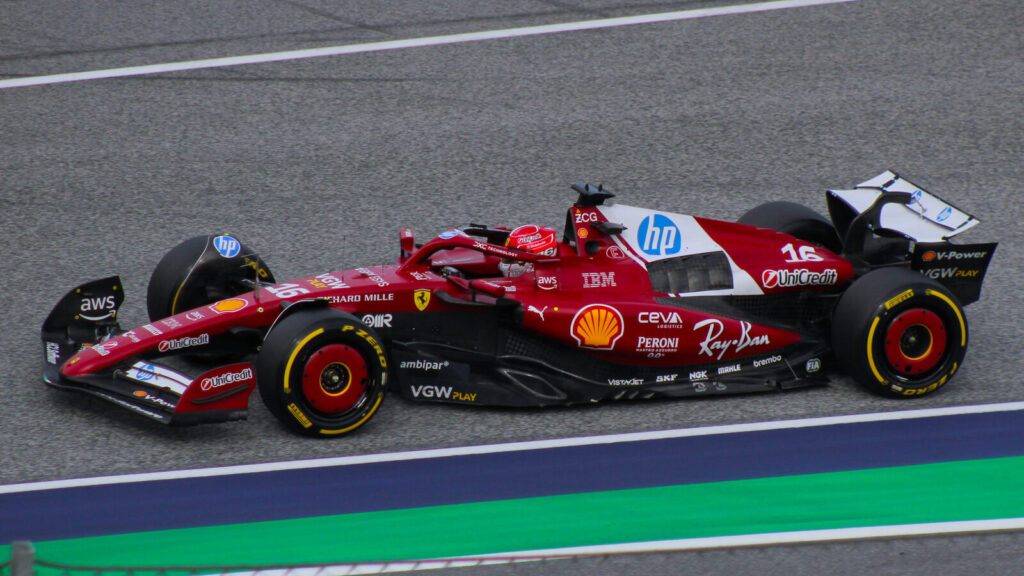
The breach itself was administrative rather than a performance advantage. Ferrari electronically logged two sets of dry tyres each for Charles Leclerc, car 16, and Lewis Hamilton, car 44, after FP1, which satisfied Article B6.4.1 of the sporting regulations. The problem came next. Those same tyre sets, numbered 16-301 and 16-401 for Leclerc and 44-301 and 44-401 for Hamilton, were never physically handed back to Pirelli before FP2 began, breaching Article B6.4.2, which requires the physical handover to happen before the following session starts.
“We were late,” Vasseur said after the session. “It will be a fine.” He was right. The stewards’ written finding noted that Hamilton’s team representative “acknowledged the breach and attributed it to an oversight,” with an identical conclusion reached for Leclerc’s car. Both drivers were fined 5,000 euros, a combined 10,000 euros for Ferrari, and neither lost a grid position.
What Penalties Can Follow an FIA Investigation?
Fines sit at the mild end of a scale that runs through grid drops, disqualification from a session or race, and in extreme cases suspension from an event. Where a case lands depends less on the letter of the rule broken and more on whether it produced an on-track advantage. Ferrari’s tyre paperwork slip gave nobody extra pace, which is why the stewards treated it as a fine-only lapse.
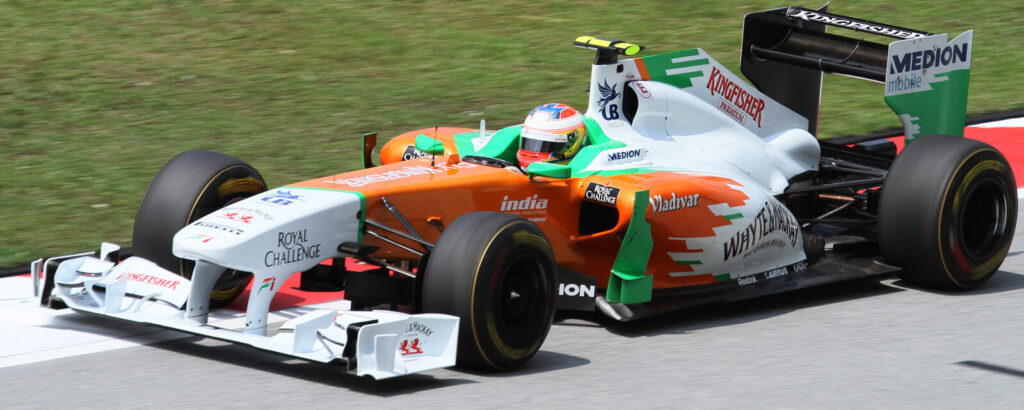
A useful comparison sits a decade back. Force India, now racing as Aston Martin, breached tyre return rules at the 2016 German Grand Prix, but that case also involved using tyre sets during qualifying that should have been off-limits, a genuine sporting benefit. Nico Hulkenberg lost a grid place for it, a heavier sanction than any fine, because the FIA treats a gained advantage far more seriously than a missed deadline.
Can Ferrari or Any Team Appeal a Decision?
Teams unhappy with a stewards’ ruling are not without recourse. Under Article 15.4 of the International Sporting Code, a competitor has one hour after a decision is published to formally notify the stewards of an intention to appeal, then 96 hours beyond that to decide whether to actually file it with the FIA’s International Court of Appeal. Given the size of the Spa fine and Vasseur’s own admission that Ferrari was simply late, nobody expects that clock to matter here. For bigger technical rulings, though, that 96-hour window is often where a championship quietly turns.
Spa has a habit of producing storylines that outlast one practice session. Hamilton arrived still chasing Michael Schumacher’s record of six wins at the track, a pursuit unrelated to Friday’s paperwork but tied to the same weekend. Leclerc, for his part, is coming off a win at Silverstone that cut into Kimi Antonelli’s championship lead. The full list of stewards’ documents from the weekend sits on the FIA’s official decision document archive for anyone who wants to read the rulings firsthand.