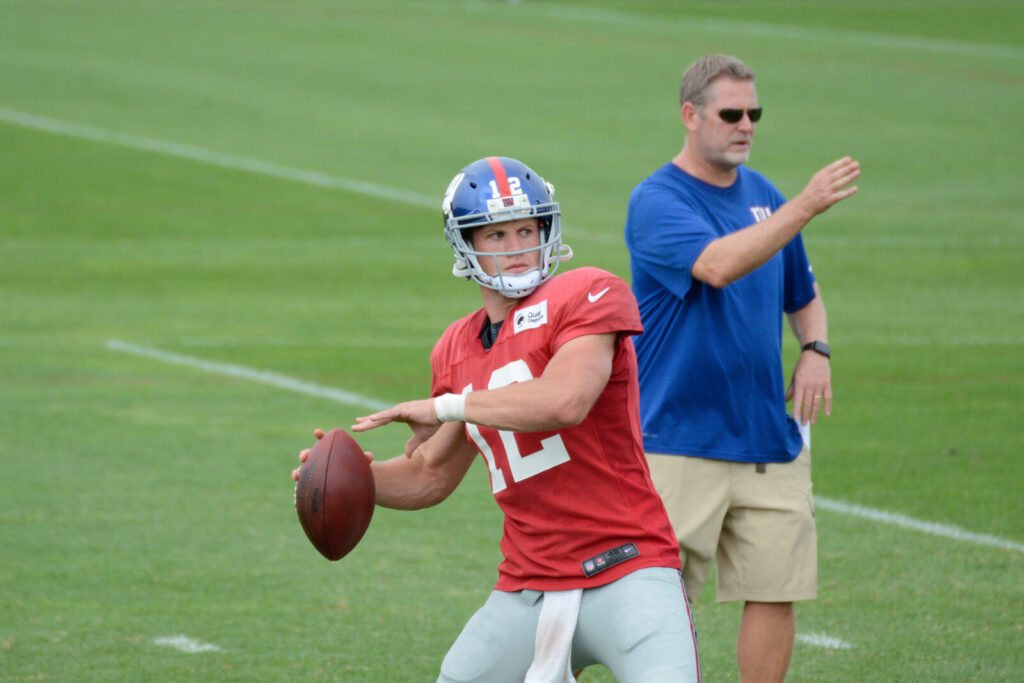
The New York Giants opened their offseason program hoping to evaluate a rebuilt defensive front and a deep receiver room. Instead, three separate Achilles tendon tears in three weeks turned their spring into a cautionary tale, and it points straight at a question a lot of fans have been typing into Google: why are NFL players tearing Achilles tendons at this rate, and is 2026 actually worse than normal?
The Giants’ cluster started on May 13, when undrafted rookie cornerback Thaddeus Dixon went down during a routine workout. Ian Rapoport of NFL Network wrote on X that Dixon, a UDFA out of North Carolina, “tore his Achilles yesterday during workouts, sources say,” calling it “an unfortunate injury for a rookie whose hamstring injury helped lead him to be undrafted.” New York placed him on season-ending injured reserve within a day.
Eight days later, veteran defensive end Roy Robertson-Harris tore his right Achilles during an 11-on-11 pass-rush rep at a Thursday OTA practice held indoors because of rain. He had started all 17 games in 2025 and was set to anchor the interior line after the Giants traded Dexter Lawrence to the Bengals. His NFL.com player profile still lists him among the projected starters, which underscores how big a hole the injury leaves on a defensive front already being remade.
The third case arrived on May 29, when receiver Gunner Olszewski crumpled on a non-contact change of direction during the team’s sixth OTA session on the outdoor grass field at the Quest Diagnostics Training Center. The Giants have not confirmed the tear with a final diagnosis, but the mechanism and the team’s own bracing for a season-ending outcome match the first two cases closely enough that beat reporters have treated it as a near-certainty.
Three tears on one 90-man roster inside a single month is unusual even by the standards of a league that has watched this injury climb for decades. A peer-reviewed clinical review archived by the National Institutes of Health found NFL Achilles ruptures averaged about 4 per season between 1980 and 2001, climbed to 13 to 16 per year between 2009 and 2016, and have averaged around 17 a year over the three seasons before publication, with 22 ruptures across the league in 2023 alone. That is a three to fivefold increase over the low baseline of the 1980s and 1990s. What the data does not yet show is a confirmed, apples-to-apples count of Achilles tears specifically during this spring’s offseason program compared with last year’s, since no league or union office publishes that tally in real time. Anyone citing an exact 2026 offseason number right now is likely estimating from beat-reporter tallies, not an audited source.
The authors of that review, led by orthopedic researcher Timothy Hewett, ranked several contributing factors. Training deficiency ranks near the top: current labor rules limit how much clubs can work players in the offseason, which the authors say leaves players without enough heavy eccentric loading before OTAs demand a sudden jump in velocity and cutting. Turf and footwear changes, rising player height, body mass and BMI, and increased use of anabolic and corticosteroid drugs all show up as plausible contributors, though the researchers stop short of naming one single cause.
That gap between a long offseason of light conditioning and the explosive, full-speed movement demanded in May practices is exactly what worries Giants trainers now. It also explains why teams around the league watch their own OTA reps for signs of fatigue rather than pure effort. The Giants still have to figure out who replaces Robertson-Harris on early downs, a question that will linger well past the dates covered in our look at which team reports to training camp first in 2026. It is the same kind of uncertainty other franchises are managing heading into camp, as Pittsburgh’s staff is discovering with its own quarterback transition.
For now, New York is down a rookie corner, a starting defensive end and, in all likelihood, a veteran special-teamer, all before a single training camp practice snap has been taken.