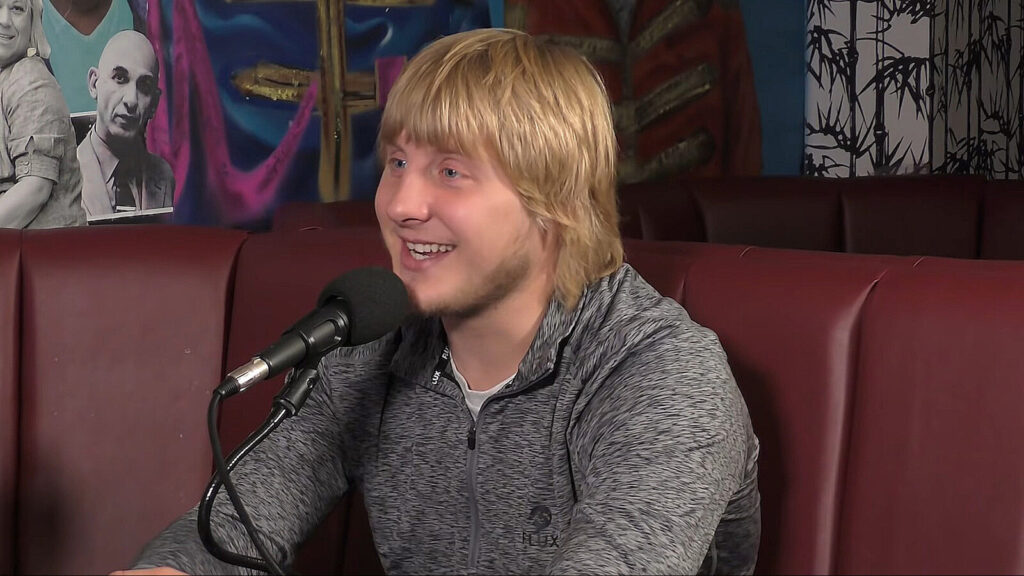
Paddy Pimblett needed 52 seconds to answer six months of doubt. On July 11 at T-Mobile Arena in Las Vegas, the Liverpool lightweight submitted Benoit Saint-Denis in the UFC 329 co-main event, a finish so fast and so technically strange that it immediately became the most talked-about moment of the card outside the headliners.
Saint-Denis arrived on a four-fight tear through Dan Hooker, Beneil Dariush, Mauricio Ruffy and Kyle Prepolec, built almost entirely on pressure and top-position violence. He never got the chance to apply any of it. He shot for an early takedown, Pimblett met him with a front headlock, and by the time the scramble settled, Saint-Denis was tapping to a choke that UFC’s own result page logs simply as a D’Arce, closed out at the 0:52 mark of round one. The win earned Pimblett a $100,000 Performance of the Night bonus.
What actually happened in that scramble is harder to file under one clean label. Pimblett finished the choke with his legs crossed underneath Saint-Denis’s trapped arm, a leg placement that belongs to a Peruvian necktie rather than a textbook D’Arce. Pimblett confirmed as much afterward, saying he had specifically drilled a Peruvian necktie for the first time in roughly a decade about five weeks before the fight, after his coaches identified Saint-Denis’s guillotine defense as a spot to attack from an unfamiliar angle. The official record calls it a D’Arce. Pimblett himself described a hybrid.
That ambiguity is part of why the finish stands out. The pure Peruvian necktie is one of the rarest submissions in UFC history, confirmed as a fight-ending hold only twice before this weekend: C.B. Dolloway used it to finish Jesse Taylor in 2008, and Misha Cirkunov used it to finish Jimmy Crute in 2019. Even folded into a D’Arce grip rather than executed in its purest form, Pimblett’s version borrowed from a technique that has decided a fight inside the Octagon fewer times than a person has fingers on one hand.
The result also resets a career trajectory that had stalled. Pimblett’s previous outing was a five-round war with Justin Gaethje at UFC 324 in January, a Fight of the Night classic fought for the interim lightweight title that Gaethje won on the scorecards. That loss raised real questions about whether Pimblett could hang with the division’s true elite over 25 minutes. UFC 329 answered a narrower question instead: when Pimblett gets a hand on an opponent’s neck, he may finish faster than nearly anyone else on the roster. His record now sits at 24-4, with 11 of those 24 wins coming by submission, still his most common way of ending a night early.
The ranking impact was immediate. Pimblett jumped back into the lightweight division’s top six, moving ahead of the man he had just beaten and putting himself back in range of a genuine title eliminator. For a fighter who has spent as much time defending his drawing power as his skill set, beating a red-hot, ranked finisher in under a minute is the kind of result that quiets both arguments at once. He wasted little time afterward campaigning publicly for a step up in competition, an ambition that will get its first real test whenever the matchmakers settle on his next opponent. Fans can track how that next assignment gets built through our explainer on how UFC rankings and title shots actually work.
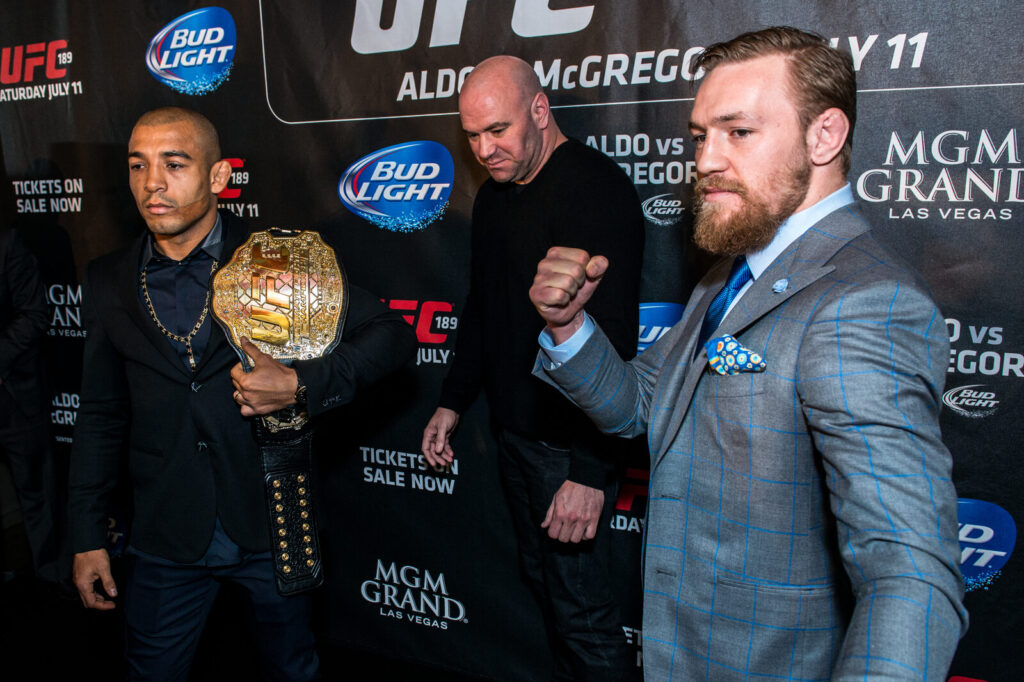
None of it erases what the Gaethje fight exposed. A five-round decision loss showed Pimblett can be out-worked over a full fight, and one highlight-reel submission does not rewrite that. What it does is give him leverage he did not have a week ago, on a card built around Conor McGregor’s return against Max Holloway. That headline act is its own story, covered separately, but it is worth noting Pimblett’s stoppage happened on the same night and arguably outshined it for pure shock value. For the full slate from Las Vegas and continuing UFC 329 fallout, see our explainer on how UFC scoring works.
Where Pimblett goes next is unresolved. Saint-Denis will look to rebuild against another ranked name, and the lightweight division above Pimblett is deep enough that no single win guarantees a title shot. But 52 seconds bought him something a decision loss had taken away: the benefit of the doubt.