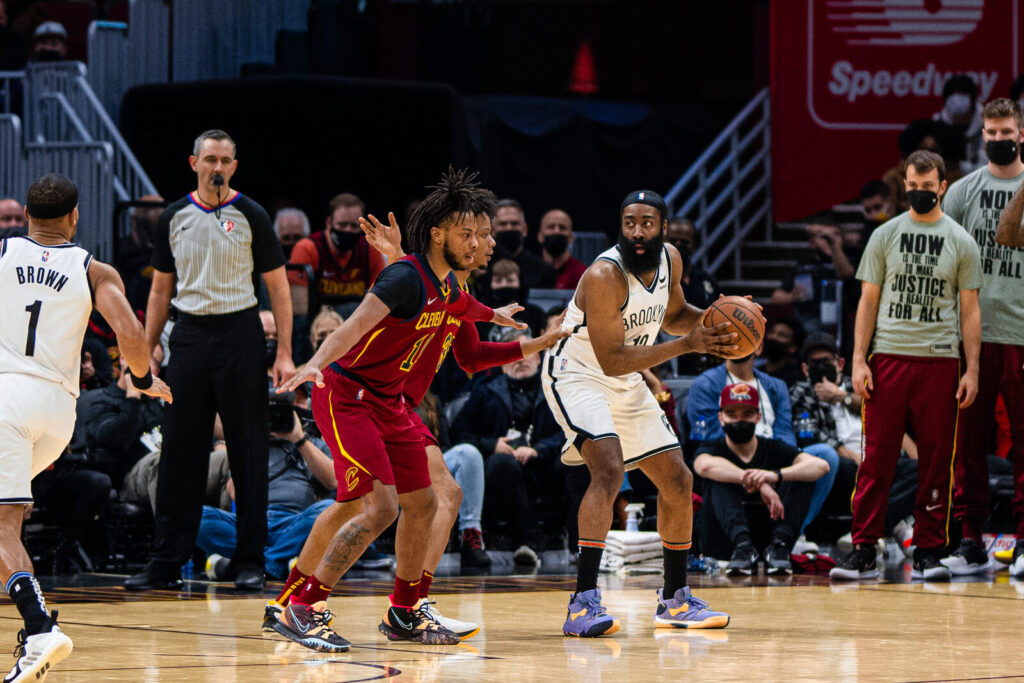
James Harden turned down $42.3 million to stay unsettled, at least for a few weeks. That is the practical read on his decision to decline his player option for 2026-27 with the Cleveland Cavaliers, a move reported by ESPN’s Shams Charania that sets up a new multiyear contract instead of a guaranteed nine-figure payday already on the books. For a franchise trying to build a real contender around Donovan Mitchell, the terms of that new deal matter far more than the headline that Harden opted out.
Harden arrived in Cleveland through a February 4 trade that sent Darius Garland and a second-round pick to the Los Angeles Clippers, a swap that reshaped the Cavaliers’ backcourt in the middle of the season. It worked. Cleveland rode the pairing of Mitchell and Harden to its first Eastern Conference finals appearance since 2018, a run that ended when the New York Knicks swept the series. Harden signaled afterward that he wanted to stay, and the Cavaliers apparently feel the same way, since the sides are already sketching out a new agreement rather than letting him test an open market as an unrestricted free agent.
The number circulating around the negotiation is a two-year deal in the $60 million range, which works out to roughly $30 million annually. That is a discount of more than $12 million a year against what Harden’s option would have paid him in 2026-27 alone. Some reporting suggests the money could stretch across three years instead of two, which would lower the annual hit even further and give Cleveland more room to maneuver elsewhere on the roster.
That trade-off, a lower average salary in exchange for the security of a second or third guaranteed season, is where the real story lives for a front office. NBA teams work backward from the luxury tax and the second apron, thresholds that punish rosters for staying expensive and restrict how a club can use trade exceptions or the mid-level exception. Every dollar Harden shaves off his own number is a dollar Cleveland can spend, or avoid taxing, somewhere else in the rotation.
It also lines up with what Harden actually gave the Cavaliers once he arrived. In 26 regular-season games in Cleveland he averaged 20.5 points, 7.7 assists and 4.8 rebounds while shooting 46.6 percent from the field and 43.5 percent from three, numbers that helped push the roster to a top-four seed in the East. In the playoffs he leaned closer to facilitator than primary scorer, averaging 19.2 points, 5.5 assists, 5.1 rebounds and 1.7 steals across the postseason, though his efficiency slipped in the sweep against New York, when he shot 38.9 percent over the four Eastern Conference finals games. That drop-off is worth remembering as Cleveland shapes the rest of the roster, since it suggests Harden is more valuable running the offense than closing it out against elite defenses.
Signing a 36-year-old, 11-time All-Star to a below-market deal only pays off if the years attached to it do not outlast his usefulness. Harden is entering his 18th NBA season, and a three-year term would carry him into his age-38 year. Cleveland is betting his passing and pick-and-roll instincts age more gracefully than his burst, a reasonable wager given how his role already shifted after the trade, from lead scorer with the Clippers, where he averaged 25.4 points a game before being dealt, to connector next to Mitchell.
What Cleveland does with the money it saves is the part worth watching this summer. A cap-friendly Harden deal gives the front office more breathing room below the tax lines to address the frontcourt or add shooting around Mitchell, exactly the kind of roster tweak that separates a conference finalist from a true title contender. The rest of the league’s basketball offseason has moved just as fast this summer, from the Sixers landing Jaylen Brown in a swap for Paul George to the star movement that followed once free agency erupted across the league. Cleveland’s version of that scramble is quieter, built around retention rather than a blockbuster swap, but the stakes are identical.
Harden does not need the max money at this stage of his career. What he needs is a roster built to finish what this year’s team started, and a two- or three-year deal at a discount gives the Cavaliers the flexibility to try to build exactly that around him and Mitchell before his window closes for good.