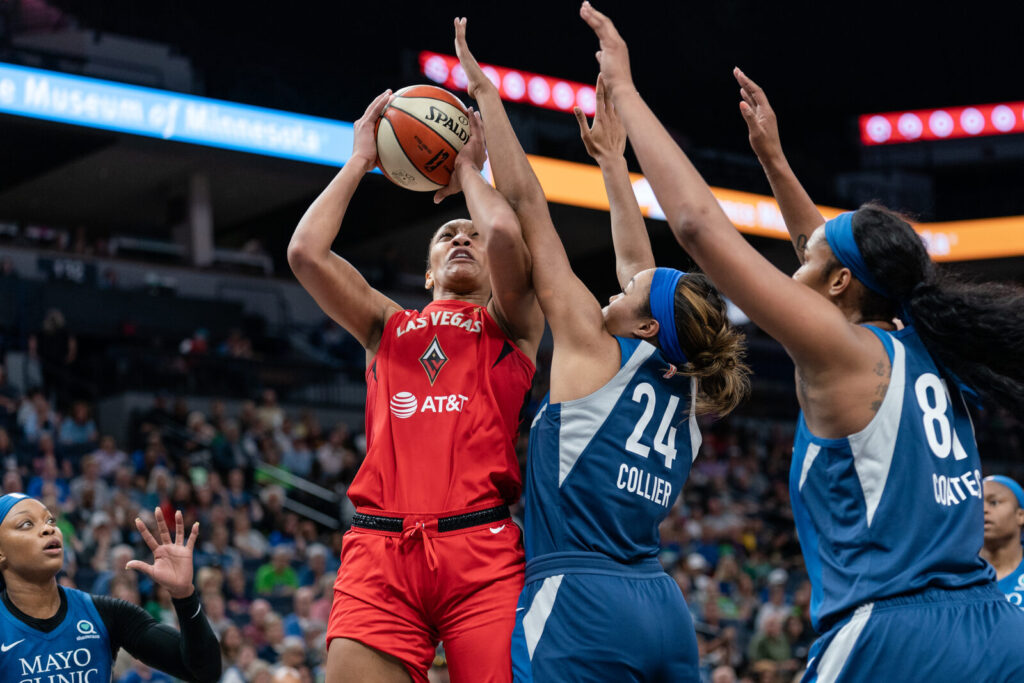
For most of basketball history, the idea that a healthy superstar might simply sit out a game would have been unthinkable. Yet over the past decade, “load management” went from a niche sports-science concept to a phrase every NBA fan knows, and eventually to something the league felt compelled to legislate against. The story of how that happened says a lot about modern professional sport: the collision between performance science, television money and the basic promise a league makes to its fans.
The logic behind load management was never crazy. NBA teams play 82 regular-season games, often on consecutive nights, and a growing body of performance research suggested that managing minutes and strategically resting players could reduce soft-tissue injuries and keep stars fresher for the playoffs. Teams with championship ambitions began treating the regular season as something to be survived rather than maximised. The problem was the externality: fans who bought tickets months in advance, and broadcasters who paid billions for marquee matchups, were increasingly left watching star-less games.
The Player Participation Policy
The NBA’s answer arrived ahead of the 2023-24 season, when the Board of Governors approved the Player Participation Policy. The policy defines a “star” as any player who has made an All-Star or All-NBA team in the previous three seasons, and it imposes real constraints: teams must not rest more than one star in the same game, stars are expected to be available for nationally televised games and in-season tournament games, and teams cannot shut a healthy star down for long stretches of the season. The policy also asks teams to balance any rest between home and road games, on the basis that home fans should not bear all the cost.
The enforcement mechanism is financial, and it has teeth. A first violation brings a fine starting at $100,000, with penalties escalating sharply for repeat offences, rising past $1 million for a third violation and continuing upward from there. The league has used it: the Atlanta Hawks, for example, were fined $100,000 in connection with the handling of Trae Young’s availability. Commissioner Adam Silver was blunt when the policy passed, acknowledging that load management had gone “too far” and that the league owed fans a better product.
The 65-game rule changes the incentives
The second prong came through the collective bargaining agreement: the so-called 65-game rule. To be eligible for the NBA’s major individual honours, including MVP, Defensive Player of the Year, Most Improved Player, and the All-NBA and All-Defensive teams, a player must appear in at least 65 of the 82 regular-season games. The detail matters. A game only counts if the player logs at least 20 minutes, though up to two appearances of between 15 and 20 minutes can qualify under a “near-miss” exception. There is an injury carve-out: a player who suffers a season-ending injury can still qualify with 62 games, provided he had played in at least 85 per cent of his team’s games before getting hurt. Rookie of the Year, Sixth Man of the Year and the All-Rookie teams are exempt, and an “extraordinary circumstances” clause allows players to petition the league if they fall just short.
Crucially, the rule does not just affect trophies. All-NBA selections trigger supermax contract eligibility under the CBA, which means missing the games threshold can cost a player tens of millions of dollars in future earnings. ESPN’s analysis when the rule launched framed it exactly that way: a rule that changes awards races and could cost players enormous sums. The effect was visible almost immediately, as eligibility trackers became a staple of awards coverage. In the seasons since, stars have been tracked game by game; this past season, headlines noted which stars cleared the bar, with Luka Doncic and Cade Cunningham confirmed eligible while Anthony Edwards fell short, and in a previous campaign Nikola Jokic only formally qualified in his team’s final game.
Why the debate refuses to die
Players and coaches have pushed back, arguing the policy treats a genuine medical question as a public-relations problem. Their case: an 82-game schedule with heavy travel is itself the issue, and forcing tired or sore players onto the floor to satisfy a television window risks the very injuries the science is trying to prevent. The counter-argument, made by the league and many fans, is that availability is part of the job, that previous generations played through similar schedules, and that a sport sold on superstars cannot routinely fail to deliver them. The economics are unavoidable here; as we explore in how streaming platforms are changing sports broadcasting, media partners are paying record sums precisely for guaranteed star content.
There is also a deeper irony. The analytics movement that helped justify resting players, by quantifying fatigue, injury risk and the marginal value of regular-season wins, is the same movement that transformed on-court strategy, as covered in how analytics changed shot selection in basketball. Load management is, in a sense, the front office’s version of the three-point revolution: a rational optimisation that produced an aesthetic and commercial backlash. Similar tensions over data-driven decision-making run through every modern sport, as our piece on the ways data and analytics are changing modern sport makes clear.
Has the policy worked? The honest answer is partially. Award-chasing stars now plan their seasons around the 65-game threshold, and blatant multi-star rest nights on national television have become rare. But the underlying tension is structural, not behavioural. As long as the regular season is long, the playoffs are what matter, and the bodies of a few dozen players underpin a multi-billion-dollar product, teams will look for ways to protect their assets, and the league will look for ways to protect its show. The next collective bargaining negotiation will almost certainly revisit the question. Until then, load management remains what it has been for years: the argument the NBA can never quite put to rest.