In November 2021, one of the most famous names in American sport disappeared. Staples Center, home of the Los Angeles Lakers since 1999, became Crypto.com Arena under a 20-year agreement reported at $700 million — at the time the richest naming-rights deal in sports history. To many fans the renaming felt like vandalism. To the companies and venue owners involved, it was something else entirely: a carefully priced media transaction, and a window into one of the more misunderstood corners of the sports business.
What the biggest deals actually cost
The headline numbers are striking. Alongside the Crypto.com agreement in Los Angeles, SoFi paid a reported sum in excess of $600 million over 20 years — roughly $30 million annually — to put its name on the stadium shared by the NFL’s Rams and Chargers in Inglewood. In Toronto, Scotiabank agreed in 2017 to pay a reported CA$800 million over 20 years, about $40 million a year, to rename the home of the Maple Leafs and Raptors as Scotiabank Arena, a record for an arena at the time. In San Francisco, JPMorgan Chase’s deal for the Golden State Warriors’ Chase Center has been reported at around $300 million over 20 years. In Las Vegas, Allegiant Air’s agreement for the Raiders’ stadium was reported at roughly $20-25 million per year when announced in 2019.
Two patterns stand out. First, deals are long: 20 years is standard, because both sides want the name to become the venue’s identity rather than a label stuck on top of it. Second, the price tracks media exposure, not square footage. Venues that host two major franchises, marquee events and year-round concerts command far more than single-tenant buildings in smaller markets, where annual fees can be a tenth of the Los Angeles figures.
Why companies pay
The core logic is repetition and unavoidability. A stadium name is spoken by commentators, printed in fixture lists, embedded in map applications, written into news stories and repeated by fans giving directions — millions of impressions a year that cannot be skipped, blocked or scrolled past. For a brand trying to build mainstream recognition quickly, few assets compare. It is telling who buys: financial services firms (SoFi, Chase, Scotiabank), airlines (Allegiant, Etihad, Emirates) and technology challengers (Crypto.com) — companies selling trust and ubiquity rather than products you can hold.
Naming rights also come bundled with much more than the name. Agreements typically include premium hospitality, in-venue signage, category exclusivity, customer-acquisition opportunities and content rights. Scotiabank executives, for example, framed their Toronto deal explicitly around engaging hockey fans across Canada, not merely displaying a logo. In that sense a naming-rights deal is the anchor of a broad partnership — part of the same shift toward measurable, integrated agreements we describe in why sponsorship deals are becoming more data-driven.
For venue owners, the appeal is simpler: a large, contractually guaranteed revenue stream that helps finance construction or renovation. Modern stadiums routinely cost billions; a 20-year naming agreement worth $20-40 million annually is one of the few private revenue sources that can be banked before a single ticket is sold. That is why naming deals are often announced years before a building opens, as Allegiant’s was in Las Vegas and Chase’s was in San Francisco.
The risks on both sides
The history of naming rights is also a history of cautionary tales. Companies in volatile sectors have seen their names outlast their fortunes — or not last at all. Houston’s baseball stadium famously had to shed the Enron name after the company’s collapse in the early 2000s, and several venues named by fast-growing technology firms have been renamed within a few years when sponsors retrenched. Crypto.com Arena itself became a talking point when the wider digital-asset sector slumped shortly after the deal was signed, though the agreement remained in place. For rights holders, the lesson is to scrutinise a sponsor’s durability; a renaming mid-contract destroys exactly the familiarity both sides paid to build.
There is also a softer cost: fan sentiment. Supporters attach memory and identity to venue names, and renamings of beloved buildings reliably provoke backlash. Some clubs, particularly in Europe, have judged that the heritage value of names like Old Trafford, Anfield or the Santiago Bernabéu exceeds any plausible fee for replacing them outright — though hybrid approaches, attaching a sponsor to an existing name, have become common. The tension between commercial revenue and supporter identity runs through modern sport, as our piece on club ownership models in modern football explores, and it shapes how far executives are willing to push — a dynamic inseparable from global fan culture itself.
Where the market goes next
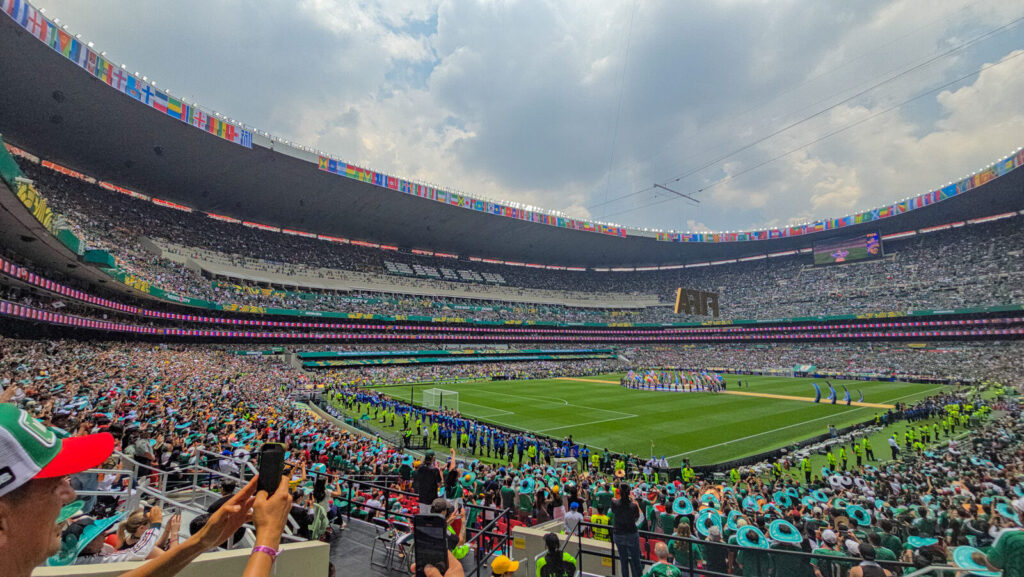
The direction of the market mirrors sports media generally: values rising at the top, driven by venues that function as year-round entertainment platforms rather than seasonal sports buildings. Stadiums now host concerts, college football showpieces, international soccer friendlies and, increasingly, global events — several venues with corporate names are staging matches at the 2026 FIFA World Cup across the United States, Canada and Mexico, albeit under neutral FIFA designations during the tournament, since FIFA’s rules require clean venue names. That caveat itself illustrates the point: the name is a media asset, and access to it is precisely what is being bought and sold.
As broadcast audiences fragment across platforms — a shift we chart in how streaming platforms are changing sports broadcasting — the value of being physically woven into sport’s biggest stages, rather than renting time on its screens, may only grow. The names on the buildings will keep changing. The economics behind them are likely to prove far more permanent.