Major League Soccer has spent three decades being described as a league of the future. In 2026, with the FIFA World Cup being staged across the United States, Mexico and Canada, the future has rather pointedly arrived. The league now stands at 30 clubs, is drawing historic crowds, and has restructured its landmark streaming partnership with Apple. Each of those developments tells part of the story of where North American soccer is heading.
Thirty clubs and a deliberate pause
MLS reached 30 teams with the arrival of San Diego FC in 2025, the latest step in an expansion march that added roughly a club a year for two decades. The league is now split into Eastern and Western Conferences of 15 teams each, a scale that puts it among the largest top-flight soccer leagues in the world by club count.
Notably, the league has chosen this moment to stop growing, at least temporarily. Commissioner Don Garber has said expansion is paused at 30 until after the 2026 World Cup, a signal that the priority has shifted from adding markets to deepening them. San Diego’s early trajectory illustrates why the model has worked: a purpose-built soccer market, a modern venue in Snapdragon Stadium, and immediate local traction. The expansion era filled the map; the next era is about making each dot on it matter.
The Apple deal, version two
The most consequential business story in MLS remains its relationship with Apple. The original arrangement, struck in 2022 and launched in 2023, was a ten-year global streaming partnership that made every match available worldwide through the MLS Season Pass subscription on the Apple TV app, a radical departure from fragmented regional broadcasting.
That structure has now been reworked. Beginning with the 2026 season, the standalone MLS Season Pass subscription was discontinued, and MLS matches instead became part of the main Apple TV subscription at no extra cost. The logic is straightforward: a dedicated paywall maximised revenue per hardcore fan but limited casual discovery. Folding the league into Apple’s general entertainment service trades some direct subscription income for vastly wider reach, putting MLS in front of every Apple TV household rather than only those willing to buy a soccer-specific product. It is one of the clearest examples yet of the dynamics we examined in how streaming platforms are changing sports broadcasting: leagues are no longer just selling rights, they are choosing distribution philosophies.
Record crowds and the Messi effect, still compounding
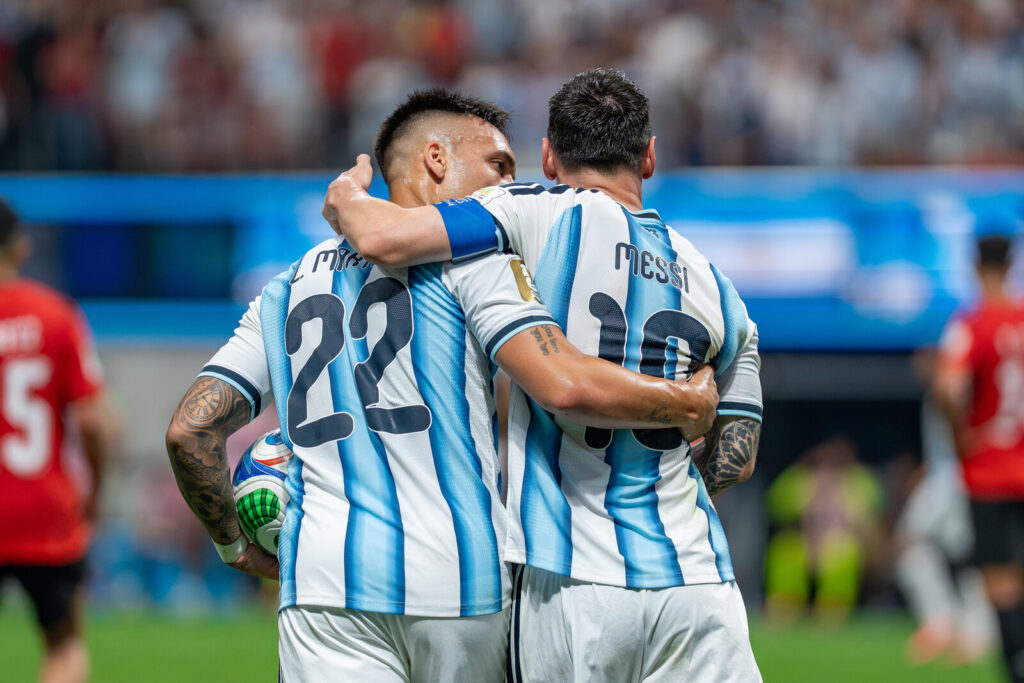
Attendance tells its own story. The 2026 season opened with a record-breaking weekend, with MLS announcing 387,271 fans across the opening slate, the strongest start in league history. And the single biggest accelerant remains Lionel Messi. Three years after his arrival at Inter Miami transformed the league’s global profile, his away matches continue to set attendance records, including a crowd of 75,824 for Inter Miami’s visit to Colorado early in 2026, one of the largest attendances ever recorded for an MLS match.
The phrase “Messi effect” undersells what has happened. His signing did not just sell tickets; it pulled forward years of growth in media attention, sponsorship interest and international credibility. The strategic question for MLS has always been what happens after him, and the league’s answer is visible in its structure: more academy investment, an expanding pipeline of young South American signings, and a transfer posture that increasingly treats MLS as a selling league for European markets as well as a buying one. The star brought the audience; the system is being built to keep it.
The World Cup window
Hovering over all of this is the 2026 World Cup, which kicked off this month across the three MLS-region nations. Major tournaments on home soil have historically been inflection points for domestic soccer: the 1994 World Cup in the United States led directly to MLS’s founding in 1996. This time the league is not being born off the back of a World Cup; it is hosting one as a mature, 30-team operation with its own stadiums, academies and broadcast platform.
The opportunity is enormous and specific. Millions of casual viewers in the US and Canada will spend a summer immersed in elite soccer, and MLS resumes its season with those fans warm. The Apple restructuring, removing the paywall precisely in the World Cup year, looks deliberately timed to convert tournament curiosity into league viewership with the lowest possible friction.
What it means for the North American game
Step back and the pattern is coherent. MLS has spent thirty years solving, in order: survival, infrastructure, scale, and credibility. Soccer-specific stadiums replaced borrowed gridiron venues. Expansion built a genuinely national footprint. Messi delivered global attention. The remaining frontier is sporting: closing the quality gap with Liga MX and the top European leagues, and producing players and teams that compete seriously in continental and global club competitions.
There are honest caveats. League-wide attendance still varies sharply by market, the single-entity structure and roster rules remain unlike anything in Europe, and the post-Messi transition is unproven. But the direction of travel is hard to dispute. North American soccer in 2026 has a 30-team first division, record crowds, a global tech company as its broadcast partner, and the world’s biggest sporting event on its doorstep. For a league once dismissed as a retirement destination, that is a remarkable position, and how it converts this summer may define its next decade. The mechanics of that conversion, ownership capital, media strategy and fan culture, connect to themes we cover in why club ownership models matter and how sports teams build global digital audiences.